
Contamination rarely announces itself. A board, cloth, fridge handle or pair of tongs can quietly move a hazard from one task to another. Prevention starts with understanding the routes, not merely making a kitchen look tidy.
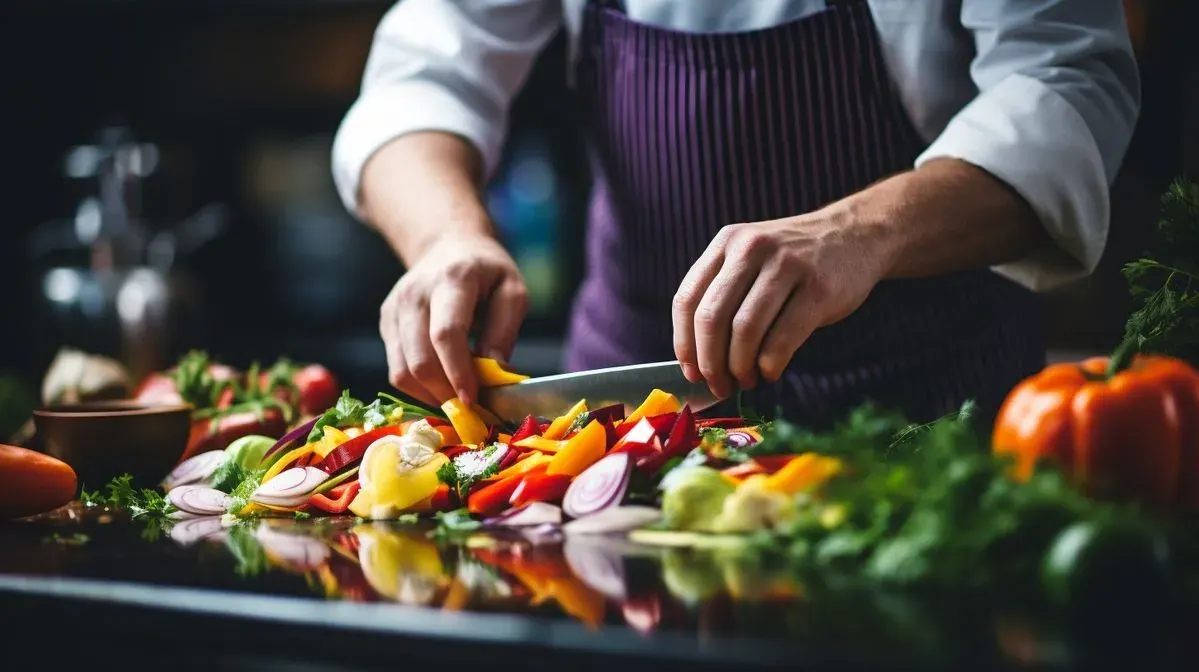
Four types of hazards
Biological hazards include harmful bacteria, viruses and parasites. Examples relevant to food handling include Salmonella, Campylobacter, pathogenic E. coli, Listeria monocytogenes and norovirus. Their sources and behaviour differ: some grow in food under suitable conditions, while viruses generally spread through contaminated hands, food or water rather than multiplying in food.
Chemical contamination may come from cleaning products, pesticides, unsuitable containers or incorrect chemical use. Physical hazards include glass, metal fragments, stones, plastic or jewellery. Allergens are naturally present in some ingredients but become a hazard when a person allergic to them receives the food unexpectedly.
Raw food and ready-to-eat food
Raw meat, poultry, fish and unwashed produce can carry microorganisms. Ready-to-eat food will be eaten without a further step that reliably controls these hazards. Keep the two apart during storage, preparation and service. Store raw meat securely below ready-to-eat food so drips cannot fall onto it.
Use separate utensils and preparation areas where practical, or clean and sanitise effectively between tasks. Colour-coded boards can support a system, but colour alone does not make equipment clean. Always follow the workplace coding system rather than assuming that a particular colour has a universal meaning.
Stop indirect contamination
Contamination often travels by a route that is easy to miss: a refrigerator handle touched after raw chicken, a reusable cloth moved between surfaces, a phone touched during preparation or a delivery box placed on a clean bench. Keep dirty and clean tasks separate and include high-touch surfaces in cleaning schedules.
Wash produce using safe water and the business’s procedure. Never use household detergent on vegetables. Damaged or mouldy food needs an appropriate rejection or disposal decision; cutting away visible mould is not a universal solution. Keep food covered and protect it from pests, dust and splash.
Prevent chemical, physical and allergen hazards
Keep chemicals in their original labelled containers or correctly labelled approved dispensers. Never put a cleaner into a drinks bottle. Store chemicals away from food and follow dilution, contact-time and rinsing instructions. Check equipment for damage and report broken glass immediately.
For allergen requests, use verified ingredient information, clean utensils and surfaces, and appropriate separation. Never promise that a dish is allergen-free without reliable controls. Removing a visible allergen from a finished plate does not remove residue already in the meal.
Try this in your workplace
Choose one task from your next shift and check the complete procedure: what could go wrong, what control is used and what you should do if the control fails. Discuss any uncertainty with the person in charge.
Regulatory reference: Official Department of Health R638 regulation. This article is educational, not legal advice.
Back to the journal